Single Origin · Kagoshima · 2026

Matcha?

Asatsuyu.

A fukamushi sencha.

Single-origin from Chiran, Kagoshima — the Asatsuyu cultivar, often called “natural gyokuro”, taken further with seven days of light shading.

知覧産 朝露 — かぶせ深蒸し茶
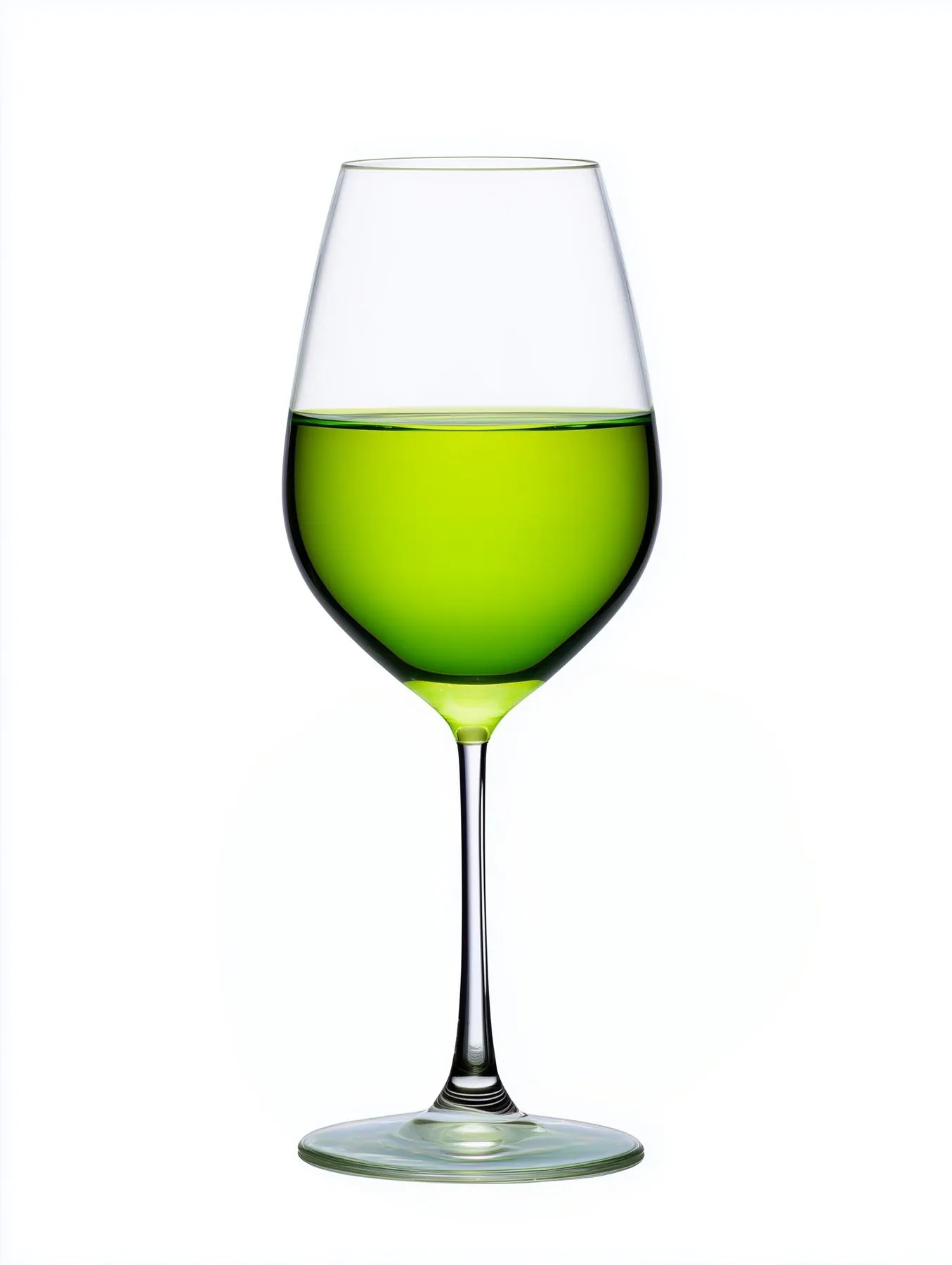
Chiran Asatsuyu sencha poured into a wine glass — vivid emerald liquor on white background
scroll
The Tea

Asatsuyu is sometimes called “the natural gyokuro” — a nickname earned by its inherent umami, rich even when grown without shading.

Our Chiran Asatsuyu takes that further. By adding seven to ten days of light shading (kabuse) to this already umami-rich cultivar, we draw out a depth that goes beyond either approach alone.

The colour of matcha. The depth of umami.
Free of bitterness.

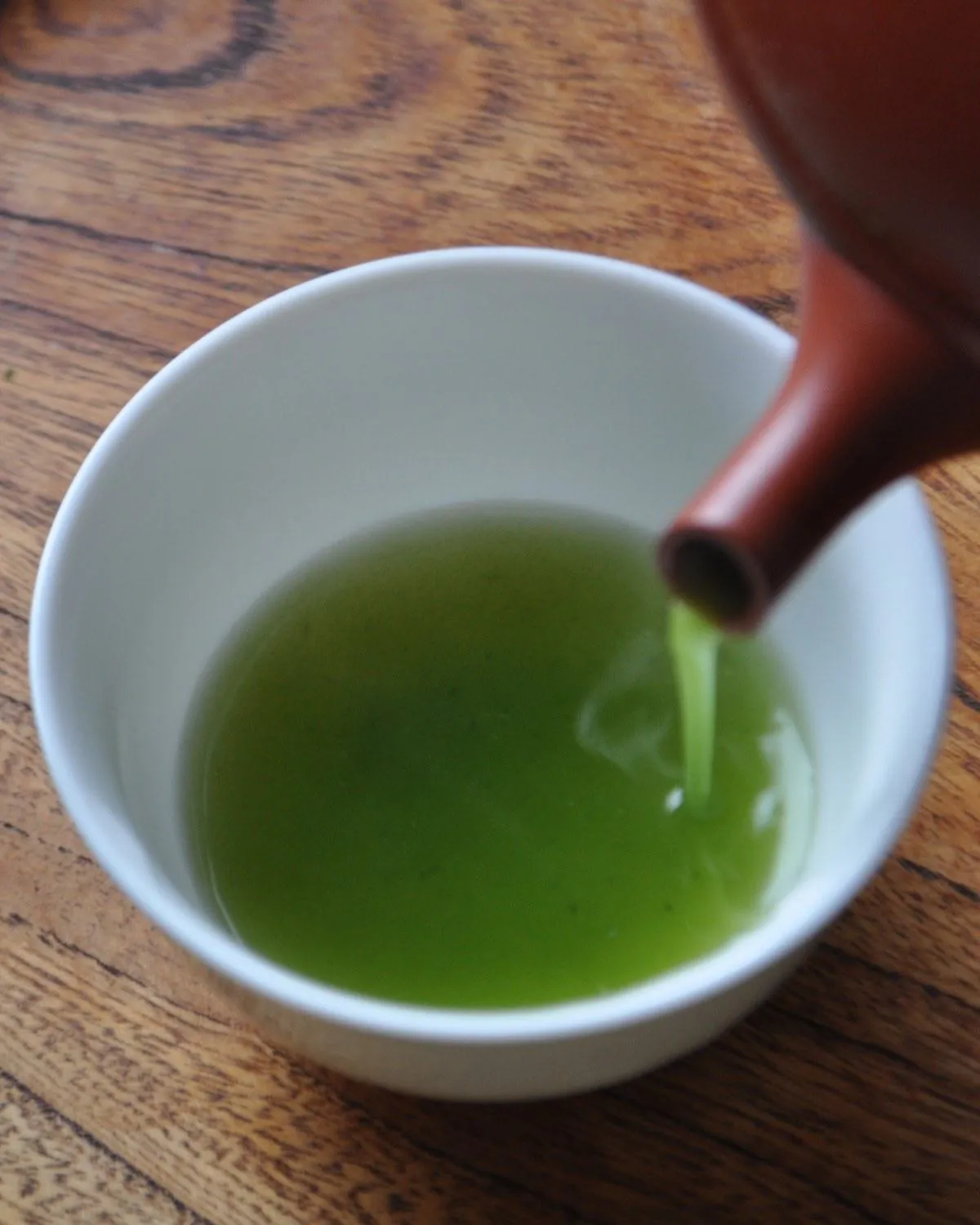
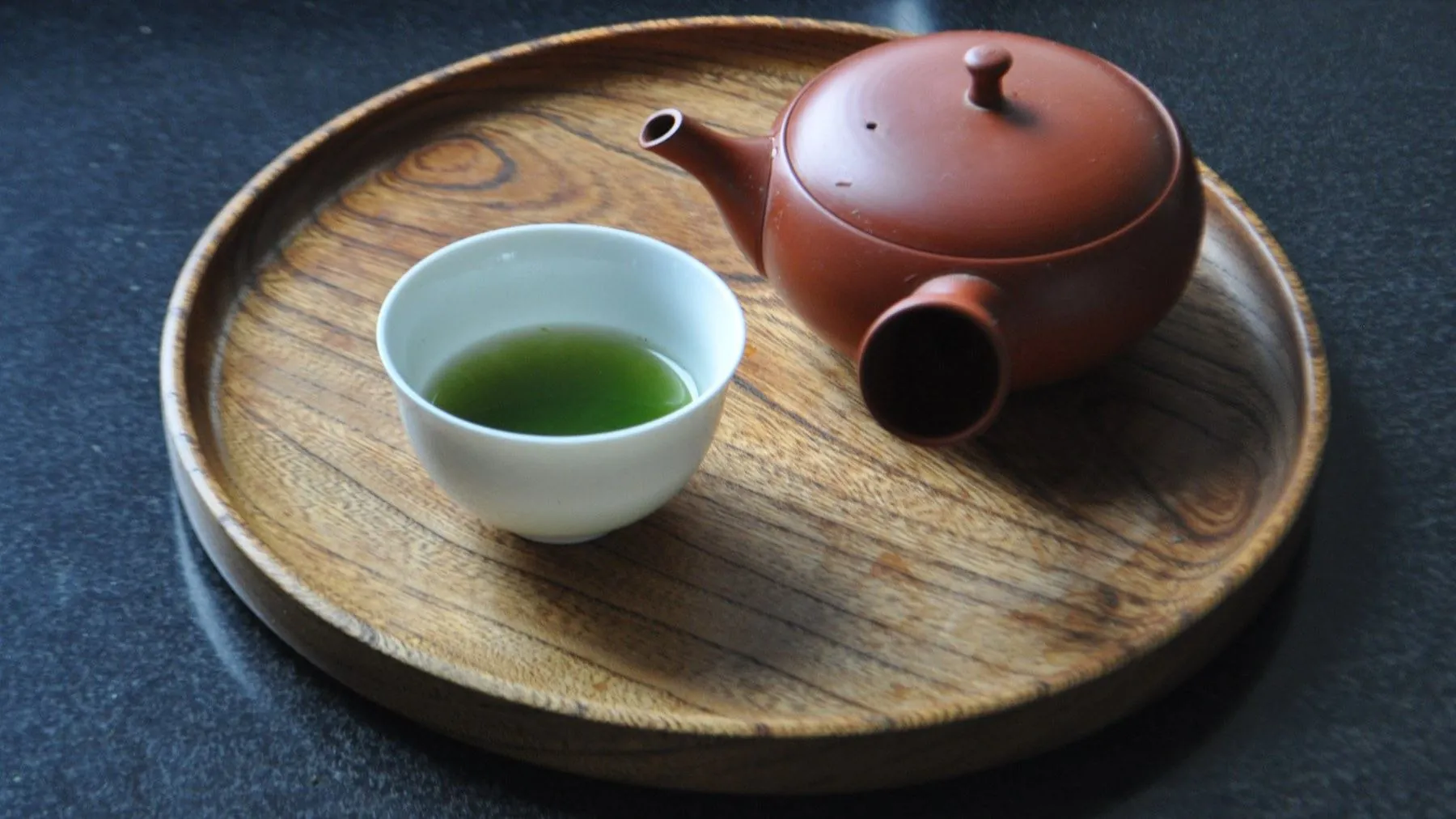
Pouring Chiran Asatsuyu sencha from a kyusu teapot into a porcelain cup — vivid emerald liquor From kyusu to cup — the moment of pouring
Tasting Notes

A profile of quiet depth

Notes recorded after first infusion at 70°C, 30 seconds.

Aroma

Sweet edamame,
kombu-like umami,
young grass

Liquor

Vivid emerald,
translucent

Body

Silky,
full-bodied,
refined

Taste

Pronounced umami,
green-pea sweetness,
virtually no bitterness

Finish

Long umami,
subtle sweetness aftertaste,
mouth-filling

The Region

From Chiran
where Japan meets the southern sun.

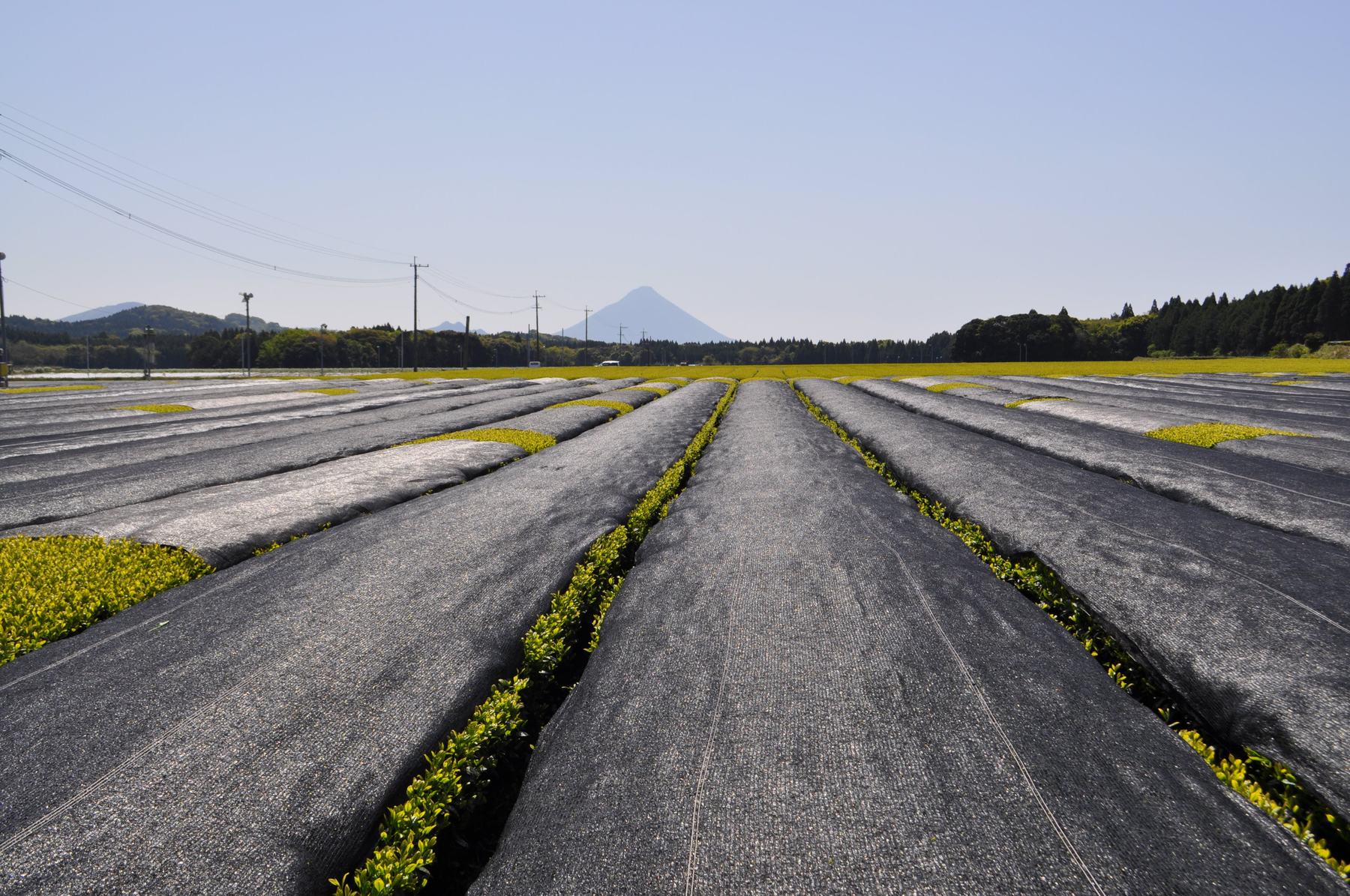
Tea fields of southern Satsuma, Kagoshima — looking toward Mt. Kaimon over rows of shaded plants
鹿児島県 知覧 菊永地区

Chiran sits in southern Satsuma, at the southernmost edge of Japan’s tea-growing world. Volcanic soil, warm climate, and an early harvest define its character — a richness and depth that northern terroirs cannot match.

Across the fields, Mt. Kaimon — “Satsuma Fuji” — rises from the southern coast, a familiar silhouette to every grower in the region.

The “Chiran-cha” appellation includes three districts: Chiran, Ei, and Kawanabe. This tea is grown exclusively within Chiran district — specifically in the Kikunaga area, on ASIAGAP-certified fields.

A small cooperative of 34 farming families has cultivated tea here together for nearly fifty years, sharing knowledge, infrastructure, and a quiet commitment to first-flush quality.

Region
Chiran, Kagoshima
Southern Satsuma · within sight of Mt. Kaimon
Certification
ASIAGAP
Cooperative-level, all fields verified
Harvest
First Flush
2026 vintage, spring harvest only
Cultivation

Kabuse
seven days under shade.

かぶせ栽培 — 七日から十日

Asatsuyu’s natural umami is rich on its own — many drink it unshaded. For our Chiran Asatsuyu, we add a measured shading to draw the depth further still.

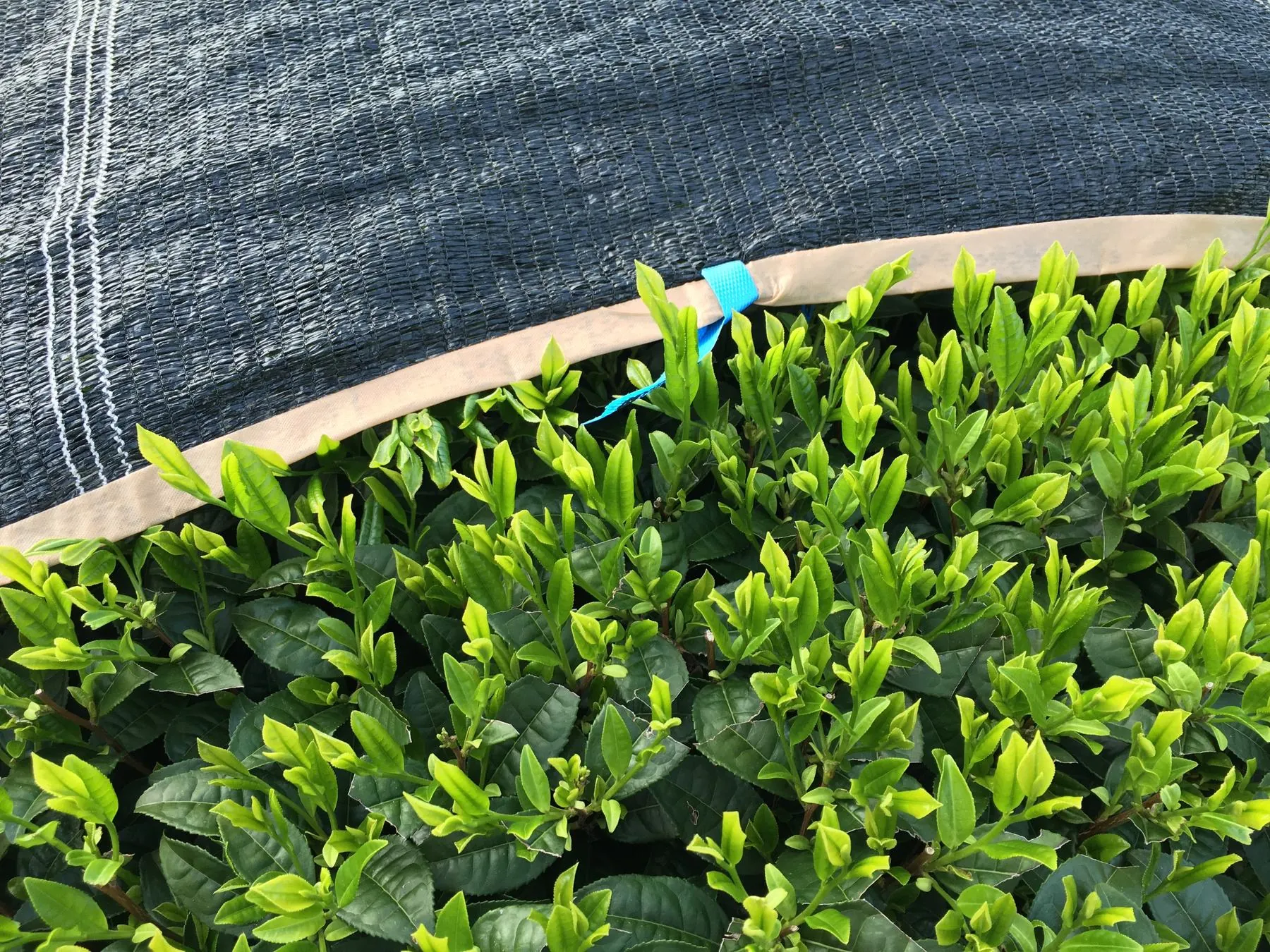
For seven to ten days before harvest, the fields are covered with shade cloth. This brief shading slows photosynthesis, redirecting the plant’s energy toward the accumulation of theanine and glutamate — the amino acids responsible for umami.

Shorter than the three-week shading of gyokuro or matcha, this is kabuse: a measured technique that draws out depth without sacrificing the freshness of sencha. The result is a tea that combines the umami of shaded leaves with the clarity of an infusion.

Shade cloth covering Chiran tea fields, with fresh asatsuyu leaves emerging at the edge
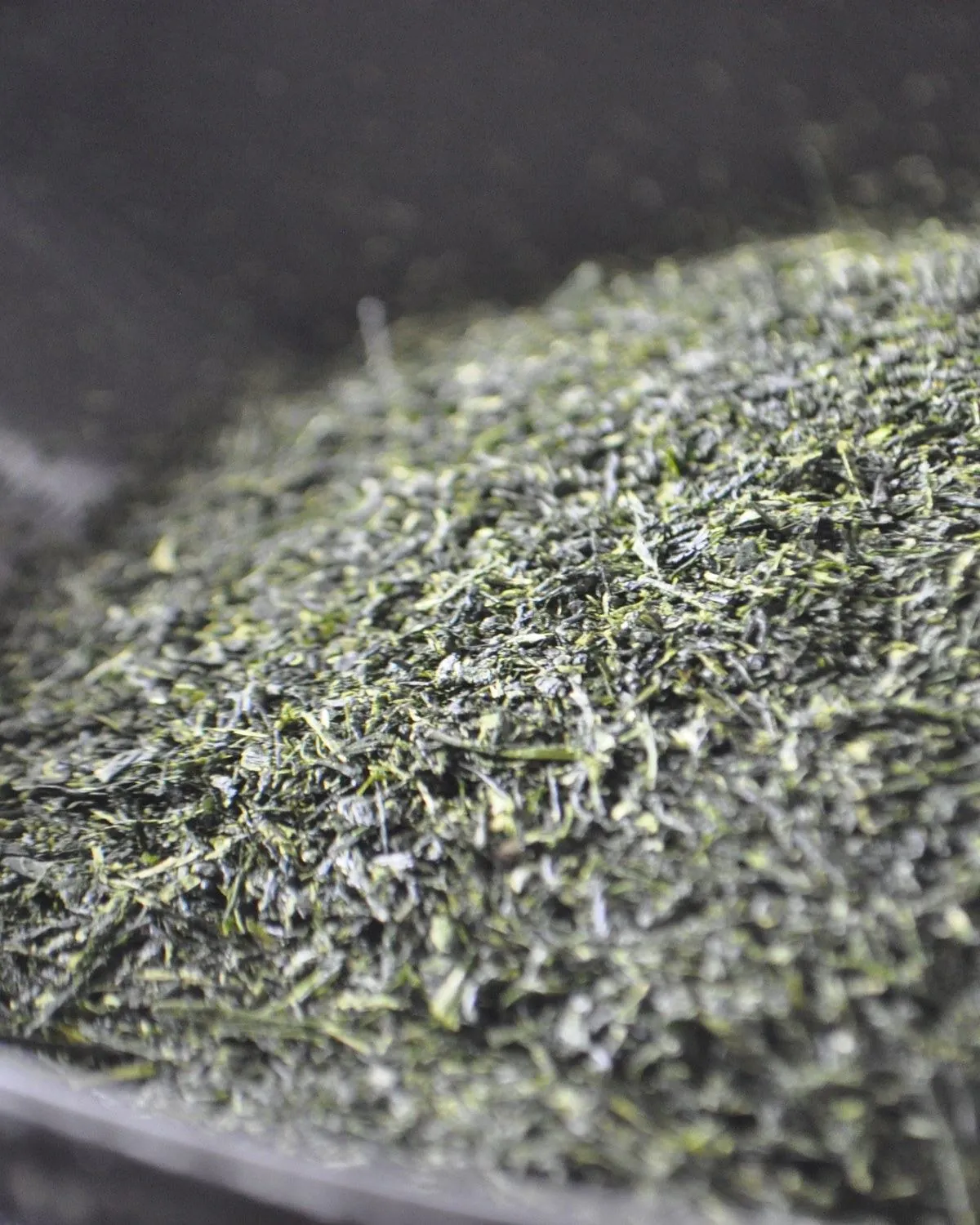
Chiran Asatsuyu finished tea leaves — fukamushi processed, the natural gyokuro cultivar
The Cultivar

Asatsuyu
the natural gyokuro.

朝露 — 天然玉露と称される稀少品種

Asatsuyu — meaning “morning dew” — is one of the rarest cultivars in Japan, accounting for less than one percent of national production.

The cultivar is widely known as “natural gyokuro”: high in theanine, low in catechins, with a soft, sweet, grain-like character even when grown without shading.

Asatsuyu is rarely grown at scale — vulnerable to frost, demanding in cultivation, and limited to Kyushu and parts of Shizuoka. Even within Kagoshima, where Yabukita dominates, Asatsuyu remains uncommon.

The Process

Fukamushi
deep-steamed in Kagoshima.

深蒸し茶 — 鹿児島で蒸し、焼津で仕上ぐ

Where standard sencha is steamed for thirty to forty seconds, fukamushicha is steamed two to three times longer.

The deep-steaming is performed in Kagoshima, close to where the leaves are picked. The longer steam softens any edge of astringency, leaving only umami, body, and clarity — a finer leaf, a denser body, and a vivid emerald liquor that infuses almost instantly.

From there, the tea travels to Yaizu, where Nagamine Seicha completes the finishing — blending, firing, and packing under our own roof, since 1876.

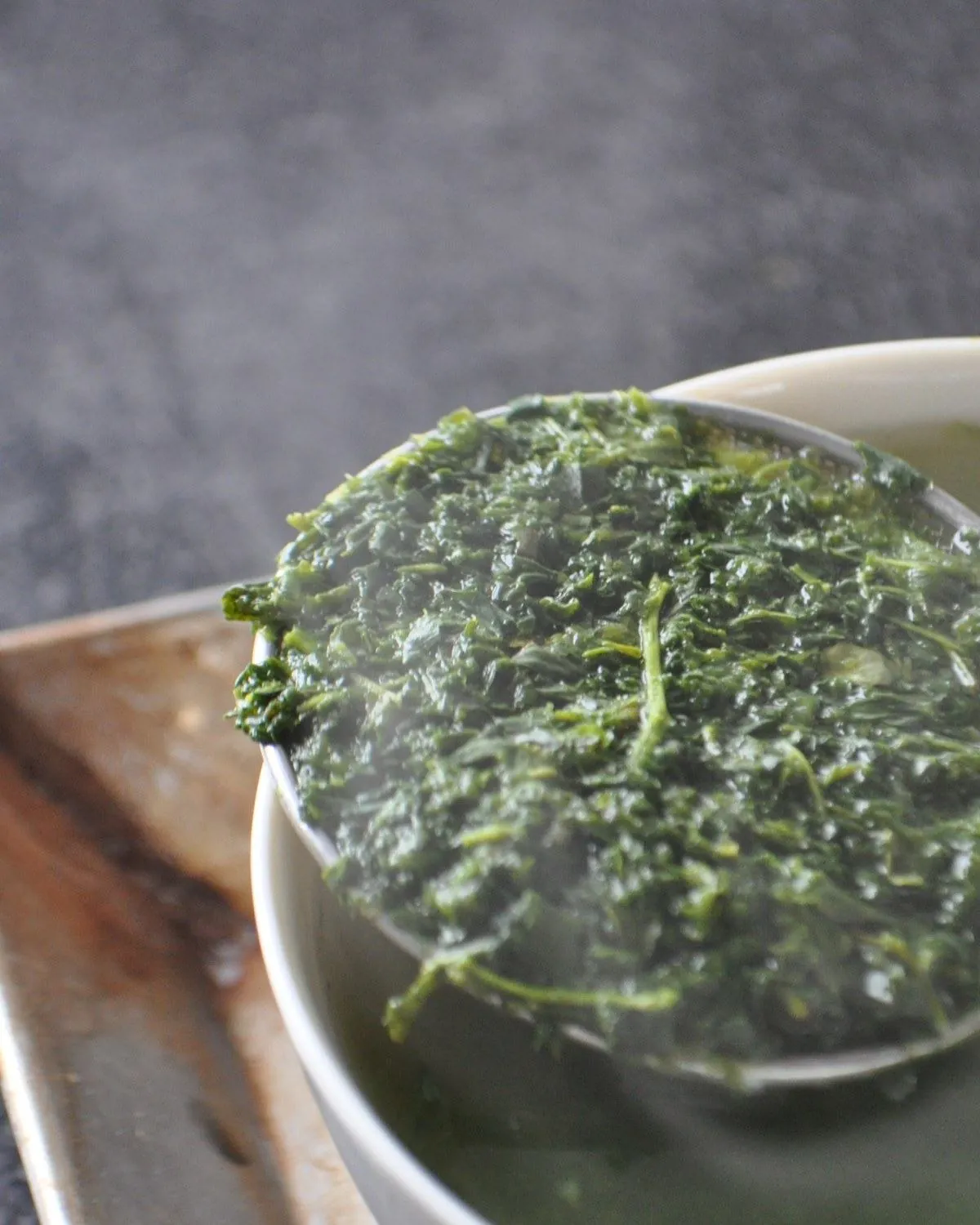
Brewed Asatsuyu tea leaves on a strainer, showing the fine particles characteristic of fukamushicha
The Difference

Why Chiran Asatsuyu,
not matcha?

Matcha Chiran Asatsuyu
Cultivation Heavily shaded · 3+ weeks Briefly shaded · 7–10 days
Form Stone-ground powder Whole leaf, deep-steamed
Preparation Whisked into water Brief infusion, 30 seconds
Colour Vibrant green powder Vivid emerald liquor
Body Suspended, full-textured Crystal-clear, silky
Umami Strong, vegetal Deep, refined
Bitterness Pronounced Virtually none

Convinced? Samples are available to qualified buyers.

The Bridge

A bridge from matcha
to sencha.

No. 01 — The Gateway

For those who came through matcha.

For those who came to Japanese tea through matcha, this is a sencha that feels familiar.

The same emerald liquor. The same depth of umami. Poured rather than whisked — a different way to meet the same depth.

Asatsuyu is the cultivar that bridges two worlds: the intensity of matcha, and the clarity of sencha.

No. 02 — The Form

What looks unconventional
yields something rare.

In the West, premium sencha is often judged by the shape of its leaves — long, needle-like, perfectly intact.

Fukamushi takes a different path. Steamed longer, the leaves break finer, releasing colour and flavour almost on contact with water.

A sencha judged not by the shape of its leaf, but by what it gives the cup.

No. 03 — Increasingly Rare

A tea preserved in its original form.

Asatsuyu was always rare — less than one percent of Japan’s tea production.

Today, the cultivar’s deep umami has found new value in the global rise of matcha. Much of Japan’s Asatsuyu is now finished as tencha, or blended into matcha, where its amino-acid density adds depth.

What remains as pure fukamushicha sencha is a smaller harvest each year — a tea preserved in its original form, for those who wish to taste the cultivar on its own.

How to Brew

Three ways
to pour the jade.

No. 01

Standard

  • Water200 ml
  • Tea5 g
  • Temperature70°C / 158°F
  • Time30 seconds

The classic preparation. Best for revealing the cultivar’s umami depth and full body.

No. 02

Cold Brew

  • Water500 ml · cold
  • Tea8 g
  • Temperature5°C / 41°F
  • Time4 hours

Slow extraction draws out an exceptional umami with virtually no astringency. Refrigerate overnight.

No. 03

Iced

  • Ice100 g
  • Tea5 g
  • TemperatureMelting ice
  • Time5 minutes

Pour ice directly over the leaves. The slow melt produces a concentrated, crystalline cup.

Common Questions

Asatsuyu, understood.

What is Asatsuyu?

Asatsuyu is a Japanese green tea cultivar, sometimes called “natural gyokuro” for its inherent umami depth. The name means “morning dew” in Japanese. It accounts for less than 1% of Japan’s tea production.

How is this different from other Asatsuyu sencha?

Our Chiran Asatsuyu is single-origin from one cooperative in Chiran, briefly shaded for seven to ten days (kabuse), and finished as fukamushicha (deep-steamed) for an emerald liquor and silky body. Nagamine Seicha has specialised in single-cultivar Asatsuyu for over thirty years — long before it was widely recognised as a tea worth selling on its own.

Is it really like matcha?

The colour and umami depth are remarkably matcha-like. The texture, however, is entirely sencha: crystal-clear liquor, silky body, no powder, no whisking. For matcha drinkers, it offers a familiar depth in a different form — without the bitterness.

Is it forgiving to brew?

Yes — and this is one of the reasons we chose this cultivar. Many fine senchas require careful temperature control and timing to taste their best. Asatsuyu, with its naturally low astringency, gives a clean, umami-led cup even with boiling water and a short steep. For specialty cafes and retail, this means the tea performs well in the hands of staff and customers alike.

What is kabuse?

Kabuse means “covered” — a brief shading of the tea fields for 7–10 days before harvest. Shorter than the 20+ days used for gyokuro or matcha, kabuse increases theanine and glutamate while preserving the freshness of sencha.

Where is it grown?

The leaves come from a small ASIAGAP-certified cooperative in the Kikunaga district of Chiran, Kagoshima — in southern Kyushu. Chiran is one of Japan’s southernmost premier tea regions, with volcanic soil and an early-spring harvest.

Is it certified?

Yes. The cultivation fields are ASIAGAP-certified at the cooperative level, a globally-recognised standard for safe and sustainable agricultural practice.

Can I order wholesale or samples?

Yes. We offer wholesale supply to qualified buyers worldwide, with samples available on request. Minimum order is 1 kg. Please request a sample or email us directly to discuss specifications and pricing.

The House

A specialist’s tea,
finished since 1876.

明治9年創業 — 朝露品種 三十年の専門性

Nagamine Seicha is a tea wholesaler in Yaizu, Shizuoka — Japan’s historical tea-finishing capital. Founded in the ninth year of Meiji, we have spent five generations selecting raw tea from across Japan and finishing it in our own facility.

In 1974, we opened a directly-operated retail shop in Yokohama. Standing behind the counter for fifty years has taught us how customers actually brew their tea at home — most pour with boiling water, most without waiting for the leaves to steep. Asatsuyu, with its naturally low astringency and rich umami, gives forgiving results even under those conditions. We chose Asatsuyu because it works for the way real people drink it.

In its early days, Asatsuyu was rarely sold as a single-cultivar tea — most of the harvest went into blending tanks, valued for deepening the colour of other senchas. We were among the first wholesalers in Japan to finish it as a single-cultivar offering, and we have done so for over thirty years.

For Chiran Asatsuyu, we source exclusively from one cooperative in the Kikunaga district of Chiran. The leaves are deep-steamed in Kagoshima, then arrive at Yaizu where each lot is hand-blended, gently fired, and packed under our roof.

Our work has been recognised at the highest level of Japan’s tea industry — including the Minister of Agriculture Award, the country’s most distinguished honour for tea finishing.
Chiran Asatsuyu sencha served — kyusu teapot and porcelain cup on a wooden tray
Specifications

For the trade.

Product
Chiran Asatsuyu
Single Origin Kabuse Fukamushicha
Cultivar
100% Asatsuyu
Origin
Kikunaga district, Chiran,
Minamikyushu, Kagoshima
Cultivation
Kabuse-style · 7–10 days shading
Process
Fukamushicha · deep-steamed in Kagoshima
Finished in Yaizu by Nagamine Seicha
Harvest
First flush, 2026
Certification
ASIAGAP · cultivation level
Packaging
Vacuum-sealed aluminium · 1 kg / 5 kg
Retail formats on request
Shelf life
12 months unopened, refrigerated
Pricing
Pricing on inquiry · FOB Yaizu
Minimum order
1 kg · samples available
Inquiry

Samples are available
to qualified buyers.

For wholesale and trade inquiries.
Sample requests reviewed individually · Reply within two business days.

Takayuki Tatara
Representative Director, Nagamine Seicha Co., Ltd.
takayuki@nagamine-seicha.co.jp
45 Isshiki, Yaizu City, Shizuoka, Japan
Tel +81-54-624-0671 · Fax +81-54-624-0673
Try Asatsuyu and More

Asatsuyu in the Discovery Set, alongside gyokuro and Tsuyuhikari.

The Discovery Set, USD 120 worldwide, places Asatsuyu sencha alongside Tohei Maejima’s gyokuro and a Triple Platinum-awarded Tsuyuhikari — the breadth of single-cultivar Japanese tea.

Request a Tasting Kit