Our Heritage

A hundred and fifty years
of Japanese tea, from a single house in Yaizu.

明治九年創業 焼津 多々良家

In 1876, a twenty-year-old named Yokichi Tatara began trading local produce — rice, barley, and, most notably, the hand-rolled tea that farmers in his village of Wada, Yaizu, were beginning to cultivate in earnest. That tea travelled from his hands, through the port of Shimizu, across the Pacific, and into the trading houses of America. One hundred and fifty years later, it is travelling again.

Lineage

Five generations of tea merchants

I
多々良 與吉
Yokichi Tatarab. 1855 · founder
II
多々良 萬吉
Manjiro Tatara
III
多々良 謙治
Kenji Tatara
IV
多々良 浩吉
Koukichi Tatarapresent chairman
V
多々良 高行
Takayuki Tatarapresent president
Chapter One
1876
Meiji 9 · 明治九年

The founding in Wada village

Yokichi Tatara was born in 1855 in Wada village, on the outskirts of what is today Yaizu City. He was twenty years old when, in the ninth year of the Meiji era, he began the business that would eventually become Nagamine Seicha — then an unassuming trade in the goods his neighbours grew: rice, barley, seasonal produce, and the tea that each household was hand-rolling with growing ambition.

Shizuoka tea, at that moment, was finding its voice. Farmers were refining their methods, and merchants in the newly opened treaty port of Yokohama were sending this tea onward — in the form of large, hand-fired baskets — to the tables of America. Yokichi shipped from Shimizu to the Acacia trading house in Yokohama, one of the foreign-managed firms then operating from the port. For the next half-century, his business travelled to English-speaking cities he would never see.
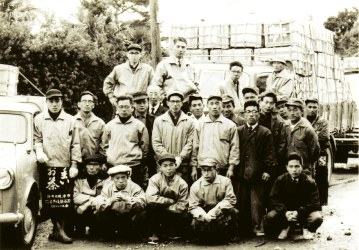
Nagamine Seicha company staff, early era
Our staff, pictured before a truck loaded with tea chests carrying the Tatara mark. 従業員集合写真 昭和期
Chapter Two
1951
Showa 26 · 昭和二十六年

Incorporation, and a domestic turn

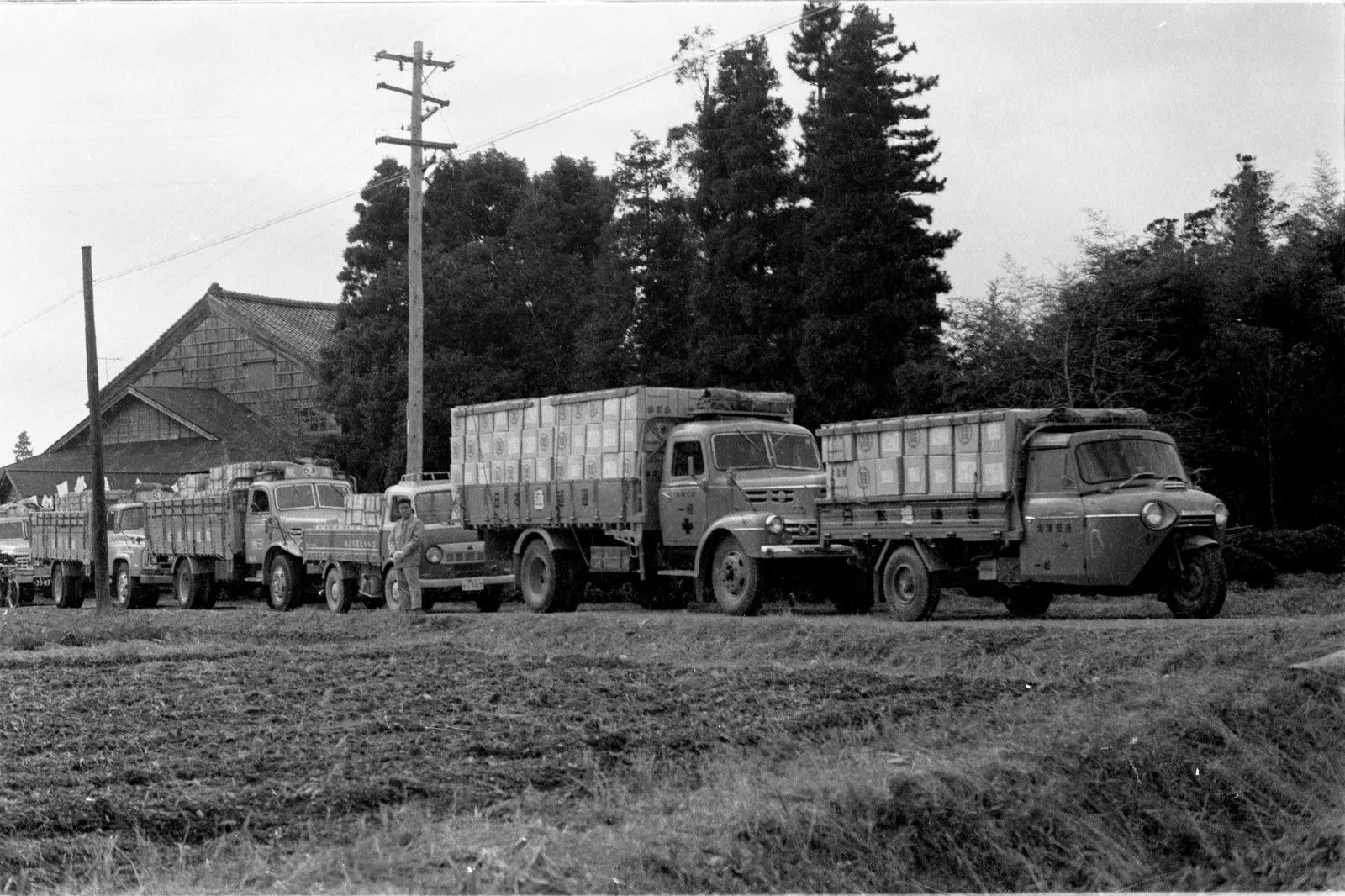
In January 1951 the family business was formally incorporated as Tatara Seicha Kojo K.K. — Tatara Tea Factory Company. By then, Japan’s tea export trade to America had sharply declined, and the company’s second and third generations had already pivoted toward domestic wholesale. Through the 1950s and ’60s, our trucks carried tea under the Tatara mark to retailers throughout Tokyo, Kanagawa, and beyond.

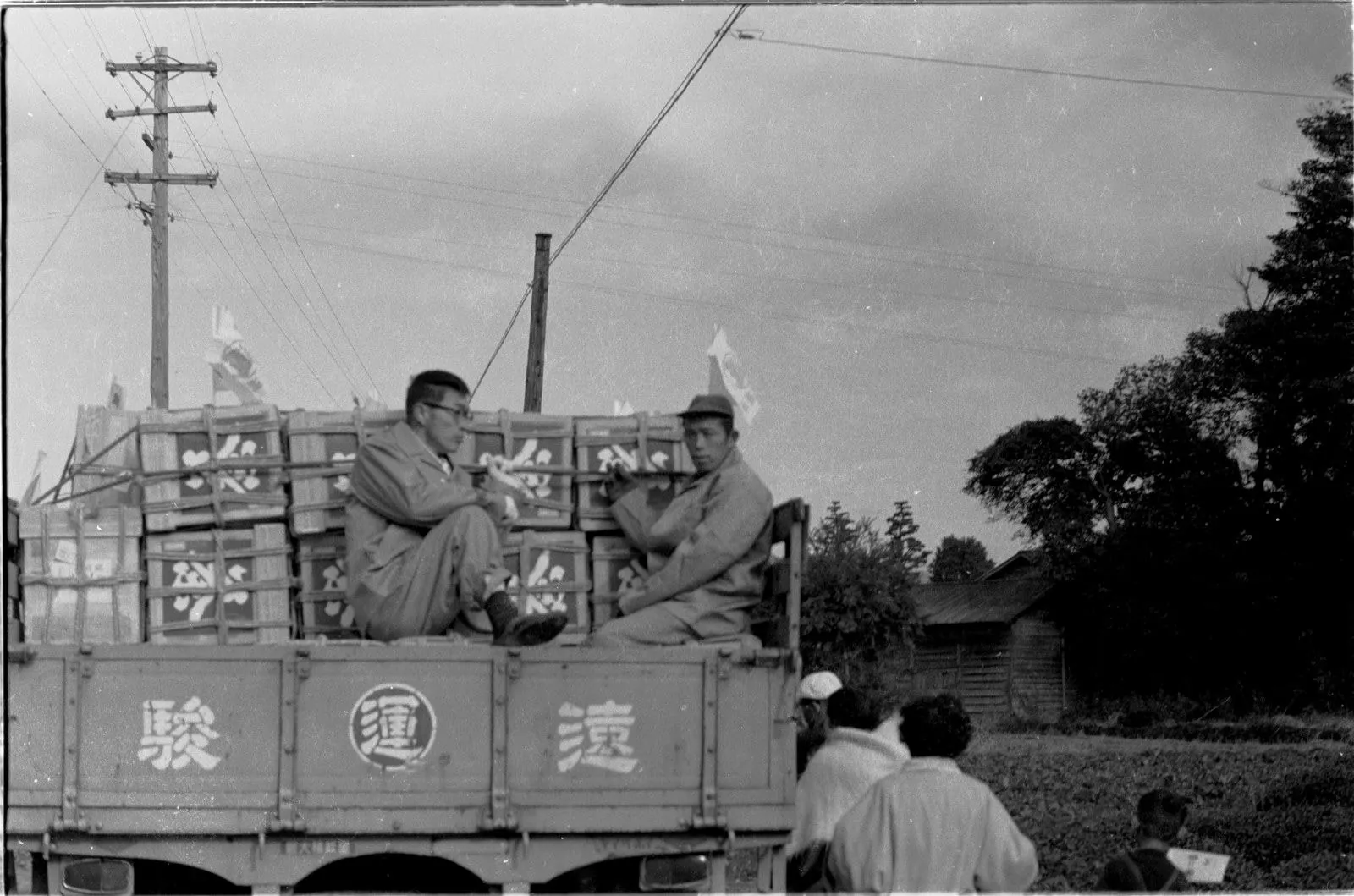
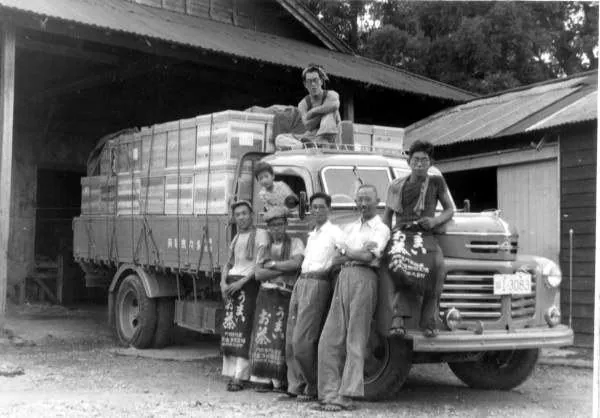
The photographs from this era are remarkably direct. Staff standing before their delivery trucks in signature hanten aprons carrying the words umai ocha — “delicious tea” — in bold gold script. A new year’s procession of six trucks laden with tea chests, on the occasion of hatsuni, the ceremonial first shipment of the year. This was a tea merchant of its time: serious about provenance, devoted to wholesale, proud of its work.

Our staff in front of a Nagamine delivery truck, mid-Showa era
Our staff before a delivery truck, mid-Showa era. The hanten aprons carry our signature phrase — umai ocha, “delicious tea.” 昭和期の配送風景 「うまいお茶」前掛け
Hatsuni, the first shipment of the new year, January 1963
Hatsuni — the ceremonial first shipment of the new year. January 1963, outside our Yaizu factory. 初荷 昭和三十八年一月 焼津
Hatsuni drivers aboard their loaded trucks, 1963
Two of our drivers aboard a truck laden with chests for the new year’s delivery. 1963. 初荷 昭和三十八年
Chapter Three
1977
Showa 52 · 昭和五十二年

The Nagamine name

In April 1977 we changed our trading name to Nagamine Seicha K.K. The change reflected a formal business and capital alliance with a Tokyo partner, and an ambition to modernise the way tea reached consumers in the two great cities of the east — Tokyo and Yokohama. New offices opened in Chiyoda, Shinbashi, and Shinjuku. Direct-to-consumer retail stores opened in Yokohama and Tokyo. Our online shop followed in 1999, and remains in continuous operation to this day.

The master blender in our factory began entering prefectural competitions, and winning them. Three Highest Gold Prizes at the Shizuoka Tea Refining Competition. The Minister of Agriculture, Forestry and Fisheries Award in 2010, followed by nine consecutive years of prefectural awards. The craft in our finishing room quietly became a matter of public record.

Chapter Five
2010s
Heisei – Reiwa · 平成・令和

The fifth generation

When Takayuki Tatara took the front of the house, two things had grown faint: the soil our trade had long depended on, and the export orientation our founder had set in 1876.

The soil came first. On Mount Takakusa, the slope rising above Yaizu where generations of farmers had worked, tea fields had been falling out of cultivation for two decades. By the time we returned to two of them — in 2021, then in 2022 — the rows were buried in undergrowth; the bushes that remained were over fifty years old, some over a hundred and forty.

We are tea merchants, not farmers. But as a tea merchant in Yaizu, we could not set aside the responsibility to the work of those who came before. The aim was modest: to bring two small fields back into cultivation, to grow tea on them again without pesticide or fertiliser, and to leave the slope visible as tea fields to anyone who climbed Takakusa for the view. The black tea from the first restored harvest, in April 2024, was recognised at the Japan Domestic Black Tea Grand Prix the same year. Read the Wild Tea story →

Lacto-fermented tea — Bodai-Sancha — was developed in collaboration with three other tea producers in the Bancha Study Group, where the fifth generation serves as vice-chair. Years of joint research on the post-fermented tea traditions of Japan led to a new anaerobic fermentation method, registered under Japanese Patent No. 7085174. From that work came bodhi, our patented sparkling tea, and a joint venture, bodhi tea & culture LLC. Read the bodhi story →

And from those products, a return to the founding orientation — tea as an export, crafted for distant tables. One hundred and fifty years from Yokichi Tatara's first shipment to Yokohama, the fifth generation is once again sending tea overseas.

At one of our Shizuoka growers’ fields, 2026
The present chapter · 2026

The tide returns.

Nagamine Seicha began as an export business. For a hundred years, that founding orientation quietly receded — our tea travelled instead to the counters of seven directly operated stores, to tens of thousands of online customers across Japan, to the cafés and restaurants we serve under Tokyo and Kanagawa contracts.

And then, in recent years, the tide turned again. The world began to ask for Japanese matcha the way it once asked for basket-fired sencha. What some have briefly called a matcha bubble has proven to be something larger — a durable and discerning international appetite for single-producer ceremonial tea from the Shizuoka region.

In our 150th year, we are returning to the work our founder set out to do: preparing tea, in the seriousness our house has always demanded, for tables on the other side of the sea. The selections in our 2026 matcha lineup are the first chapter of this new export era. The next generation of our house is already at work with the growers whose tea we bring to you.

Takayuki Tatara
— Takayuki Tatara Representative Director, Nagamine Seicha Co., Ltd.
Timeline

A concise chronology

The house today

Our network

Head office and manufacturing in Yaizu. Seven directly operated stores across three prefectures. A domestic retail base that keeps us in constant dialogue with end customers — feedback that informs every wholesale selection we offer to partners abroad.

Head Office & Factory

Yaizu, Shizuoka

45 Isshiki, Yaizu-shi, Shizuoka 425-0054. All wholesale and export operations.

Flagship Retail

Yaizu Miwa Honten & Hana Café

Our largest retail location with a direct-to-consumer tea shop and café. Home of the famed Muse Matcha soft-serve.

Tokyo

Tabata Store

Operating in the Tabata neighborhood of Tokyo since 1982 — now in its fourth decade.

Kanagawa

Yokohama Kanazawa Store

Our first directly operated retail location, opened 1974.

Seven directly operated stores total. For retail inquiries, please visit nagamine.jp.

Standards & Certifications

Formal standards we keep.

JAS Organic certification

Our refining facility in Yaizu, and selected product lots, are certified under the Japanese Agricultural Standard (JAS) for Organic. Certification scope is lot-specific — not every product line is certified. JAS-certified lots are available on request, and we are happy to clarify scope per inquiry.

Pesticide standards & export readiness

Lots can be cultivated and processed to meet US (FDA) and EU pesticide MRL standards. Certificate of Analysis is provided per lot on request. Selected lots, such as our Okabe brick-kiln tencha, are also cultivated to meet EU pesticide MRL standards.

Producer partnerships

Several of our partner growers hold their own JAS Organic certification — including Matsuda Farm, the leaf supplier for our Apple Wakocha (used in our craft sparkling tea). We work with single-named producers and disclose origin and scope on request.

Master blender

Our fifth-generation master blender, Takayuki Tatara, has received the Highest Gold Prize at the Shizuoka Tea Refining Competition three times. Every blend bearing the Nagamine Seicha name passes through this house standard.

Continue

See our matcha lineup, or get in touch for wholesale terms.